
From Military Legacy
to Economic Asset
Underwater demining as an enabler of tourism investment, coastal regeneration and strategic transformation — lessons from Porto Montenegro and Portonovi in the Bay of Kotor.
UXO Risk ManagementInvestment ReadinessCoastal RegenerationBay of KotorA safety hazard first — and, in the right location, a development constraint
"A submerged explosive remnant is first a safety hazard. But when it affects an economically strategic location, it simultaneously becomes an investment and development constraint. The reverse is equally important: removing or appropriately managing that constraint can create benefits extending far beyond the immediate clearance operation."
A century of military use, layered into one bay
The Bay of Kotor's sheltered waters and maritime access made it strategically valuable to successive military powers — and, today, make it commercially valuable for exactly the same reasons.
Austro-Hungarian naval build-up
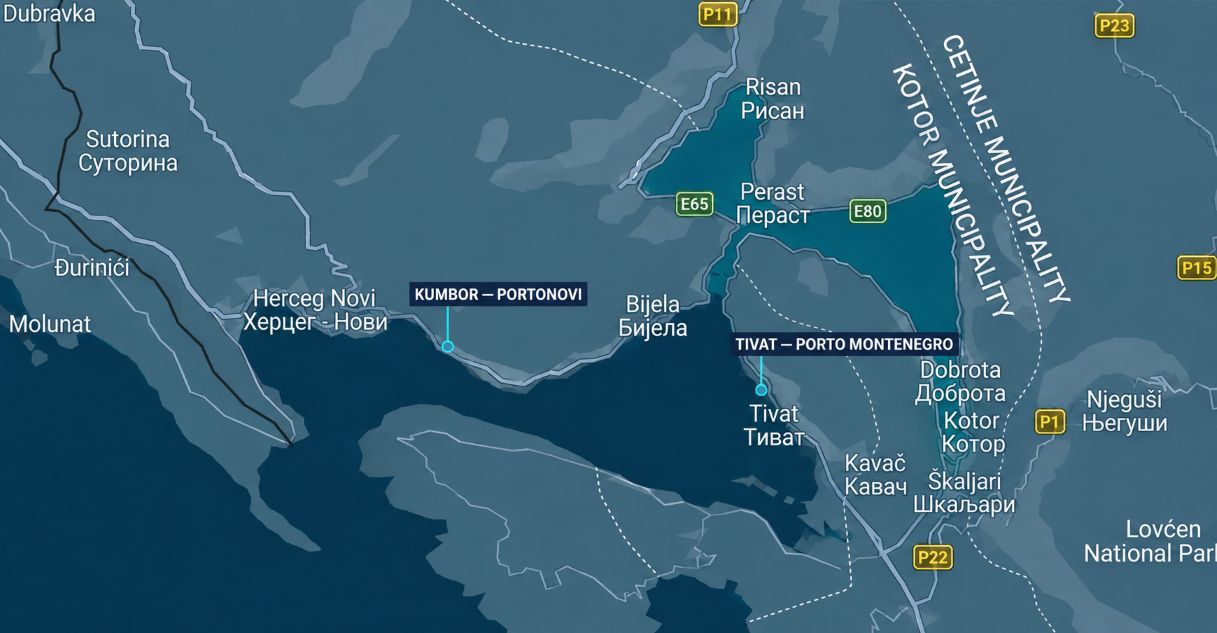
Seaplane base established at Kumbor; Arsenal "Sava Kovačević" develops as a naval and military-industrial harbour in Tivat.
Naval mines, bombs, torpedoes
Two military bases — Kumbor and Tivat — become targets of repeated attacks; ordnance from both wars settles on the seabed.
Yugoslav breakup
Mine explosives and ammunition withdrawn from Croatia are delivered to Tivat and Kumbor; part is reportedly dumped into the sea uncontrolled.
NATO air campaign
Air bombs dropped on the project area during operations against the Federal Republic of Yugoslavia.
EU–Western Balkans Summit
The former Arsenal waterfront hosts the first EU–Western Balkans Summit held in Montenegro.
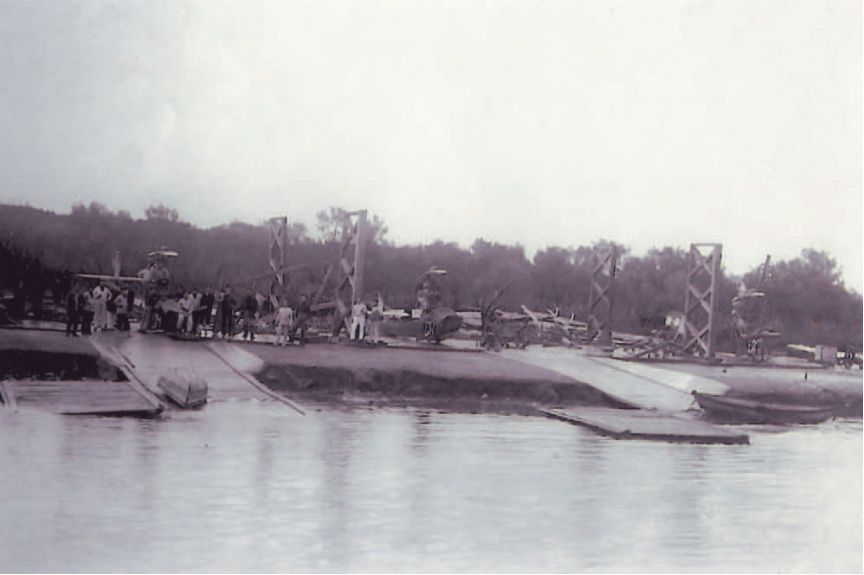 The 1914 Austro-Hungarian seaplane base at Kumbor.
A sheltered bay, and a proportionally large legacy problem
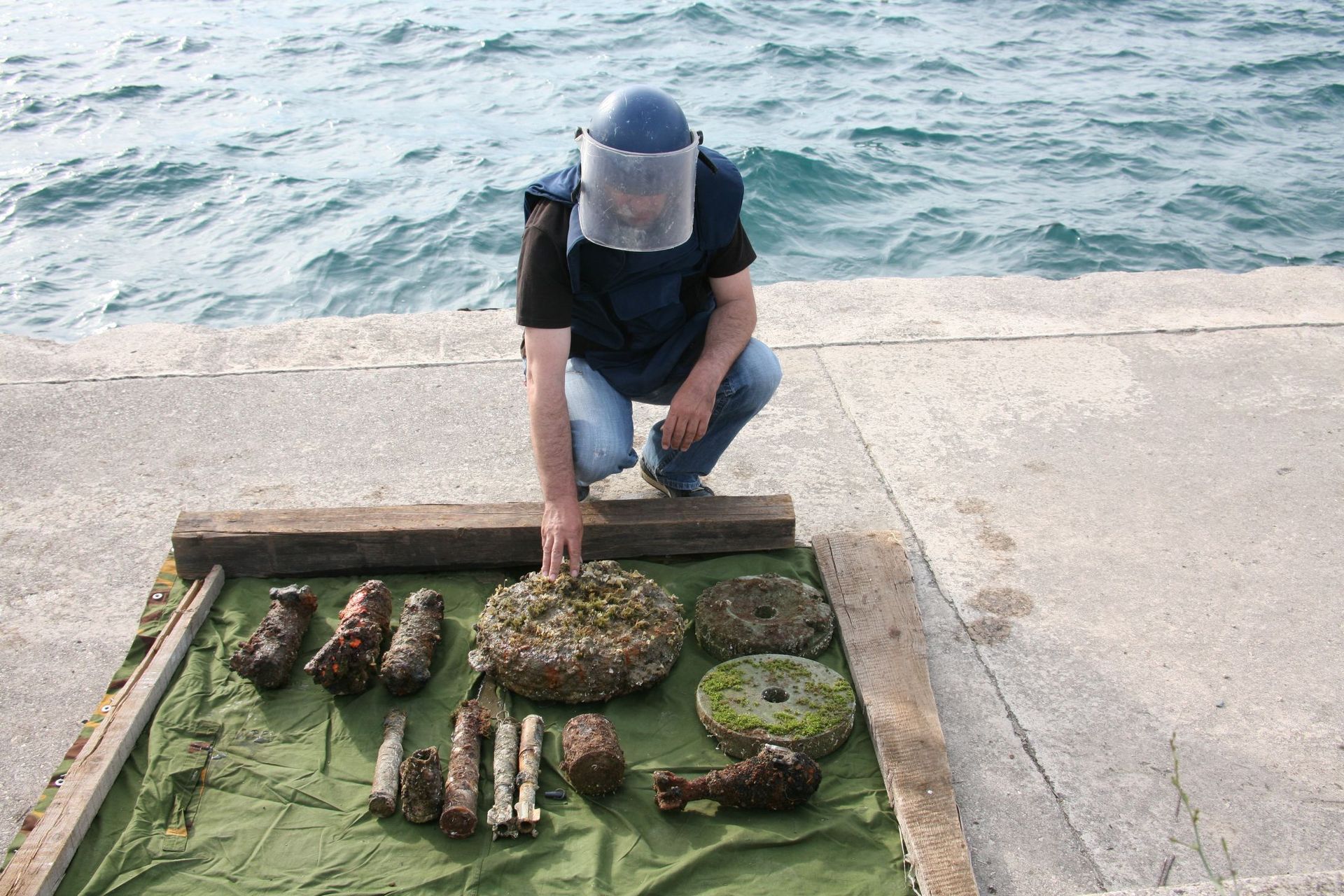
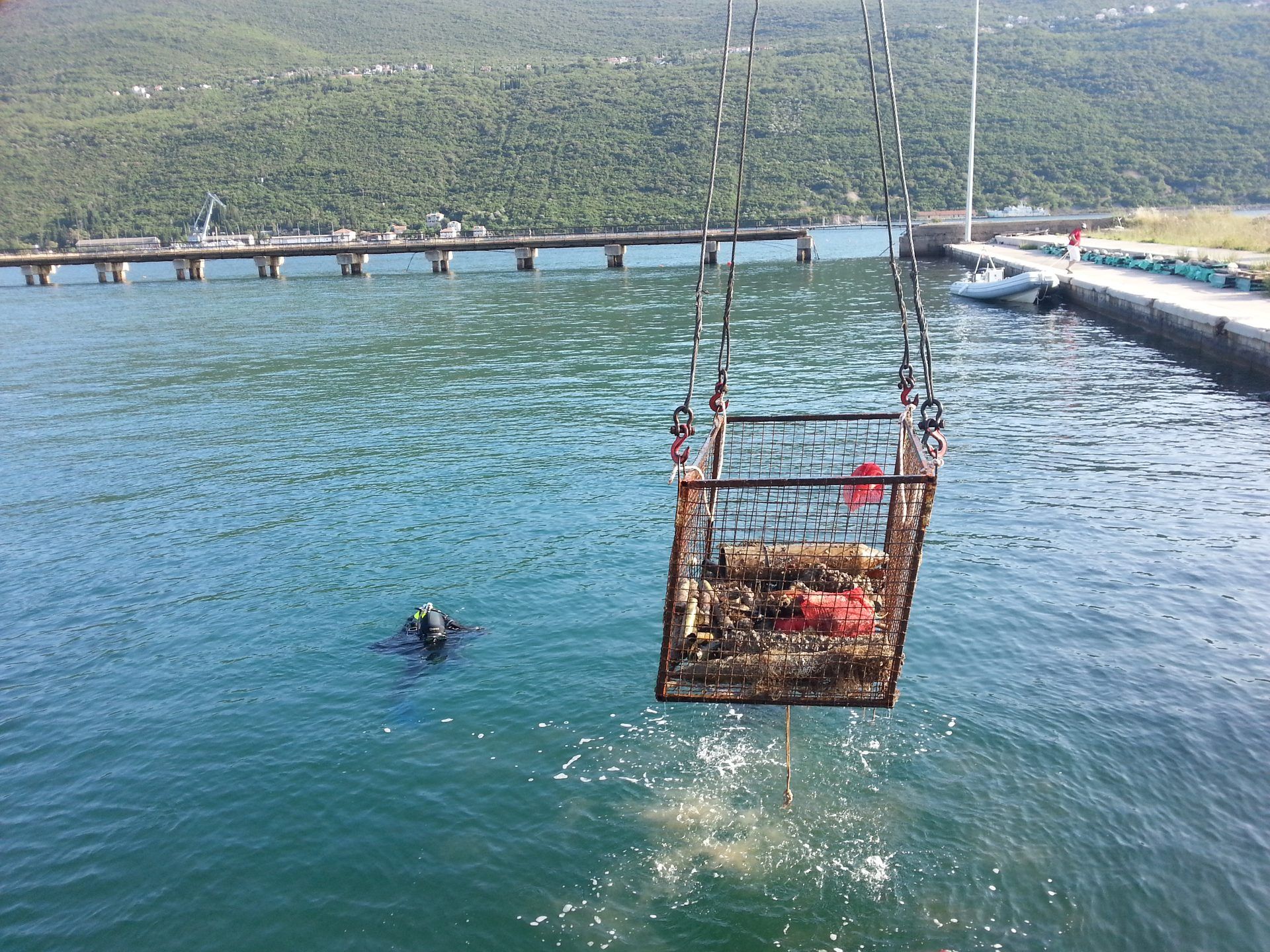
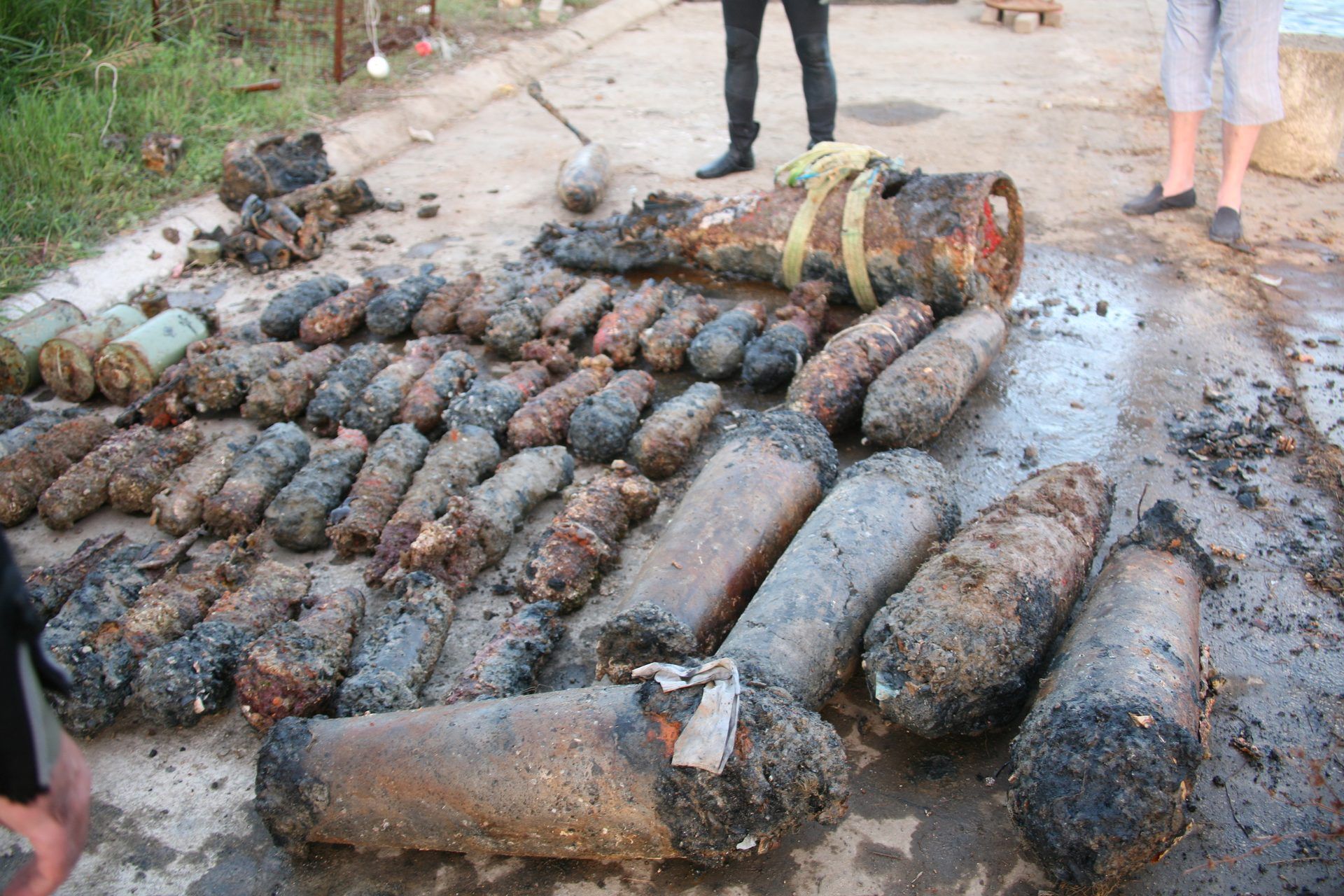
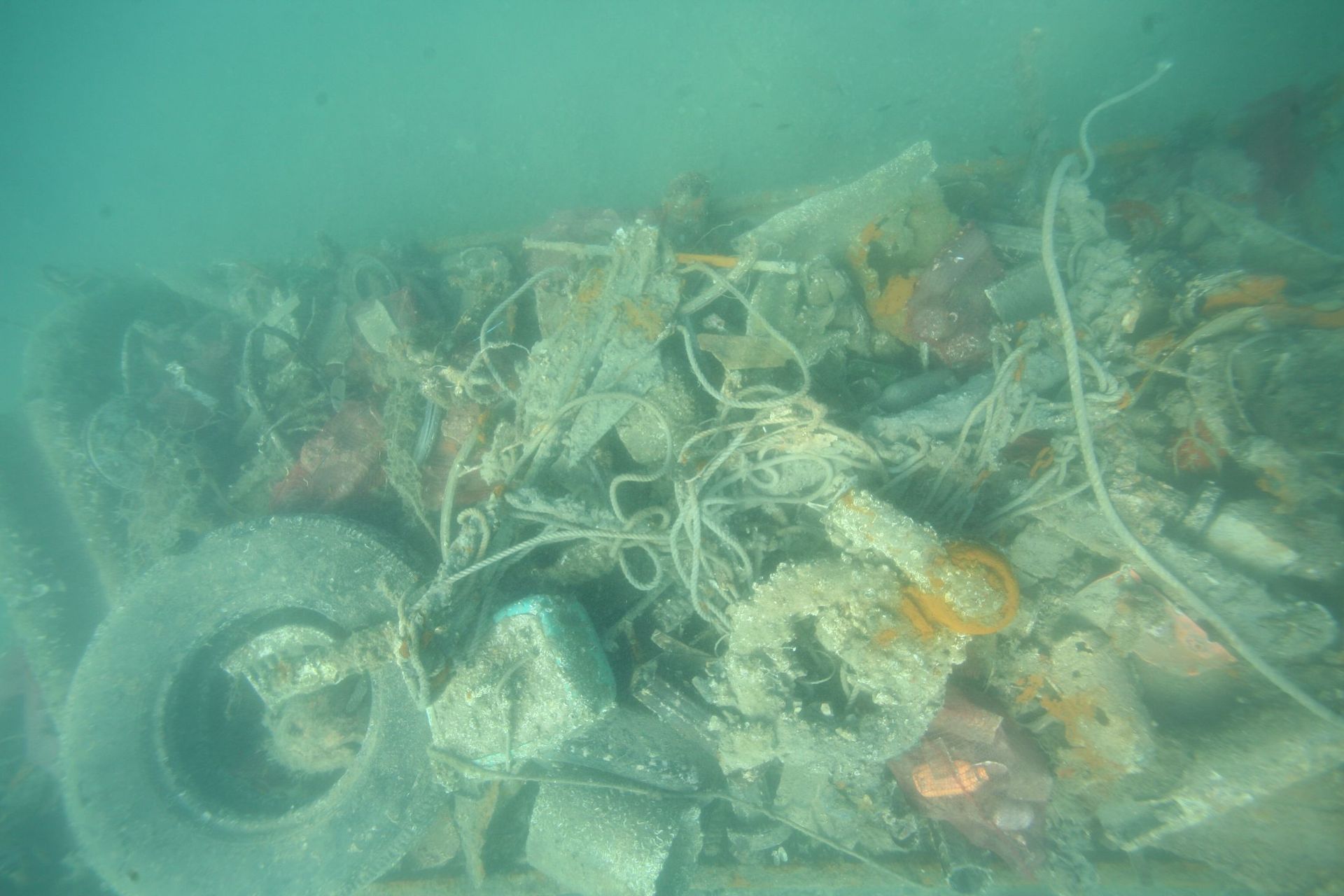
At the bay's entrance alone, RCUD's 2018–2019 underwater reconnaissance found more than 30 tonnes of mine explosives from two World Wars across roughly 500,000 m² of seabed — a single location.
The risk is not only historical: authorities do not know the location of many stockpiles, scrap collectors are drawn to recoverable metal and explosives, and dynamite fishing is periodically detected in the wider region.
Tivat Arsenal → Porto Montenegro
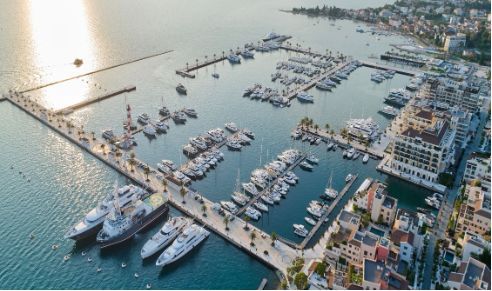
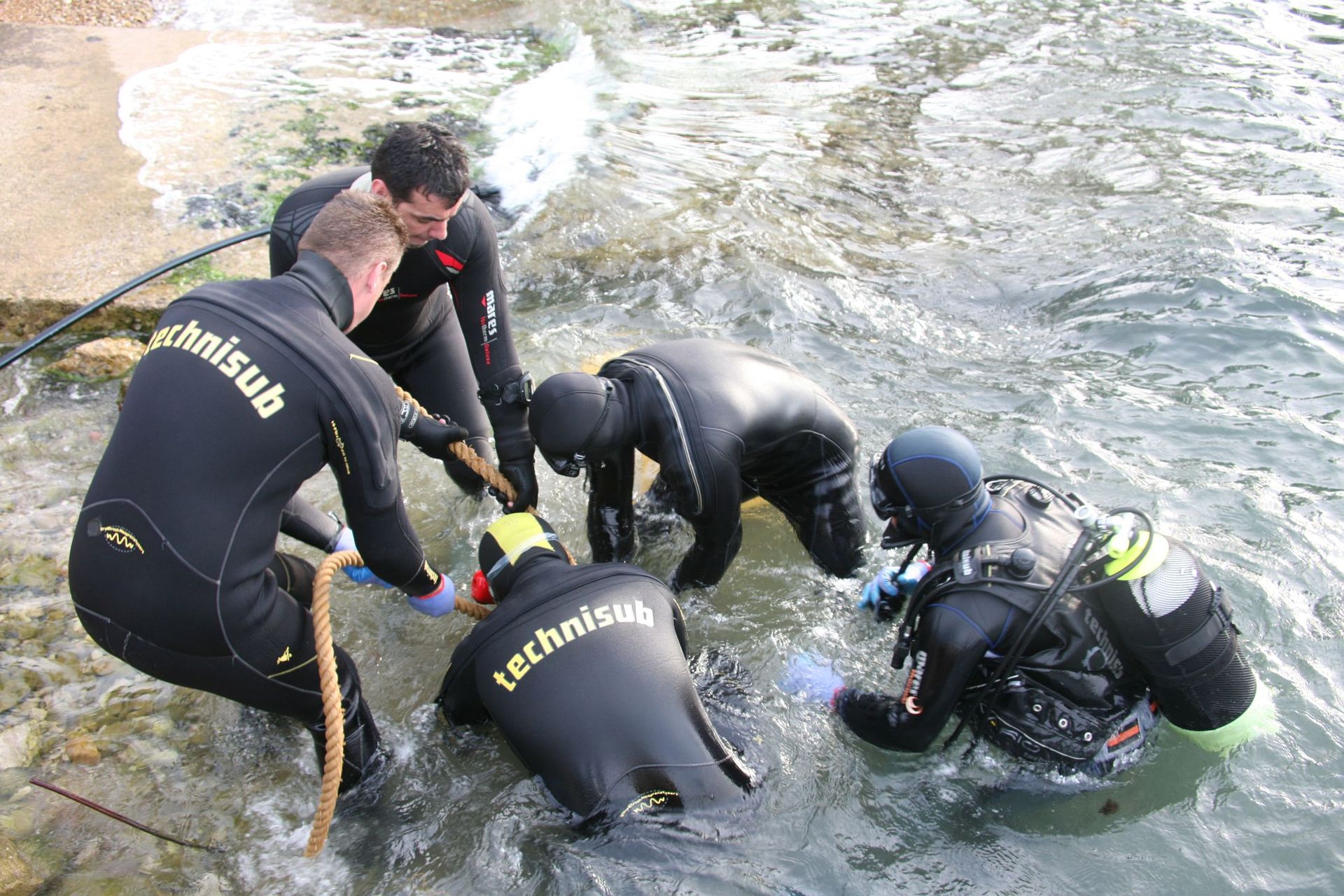
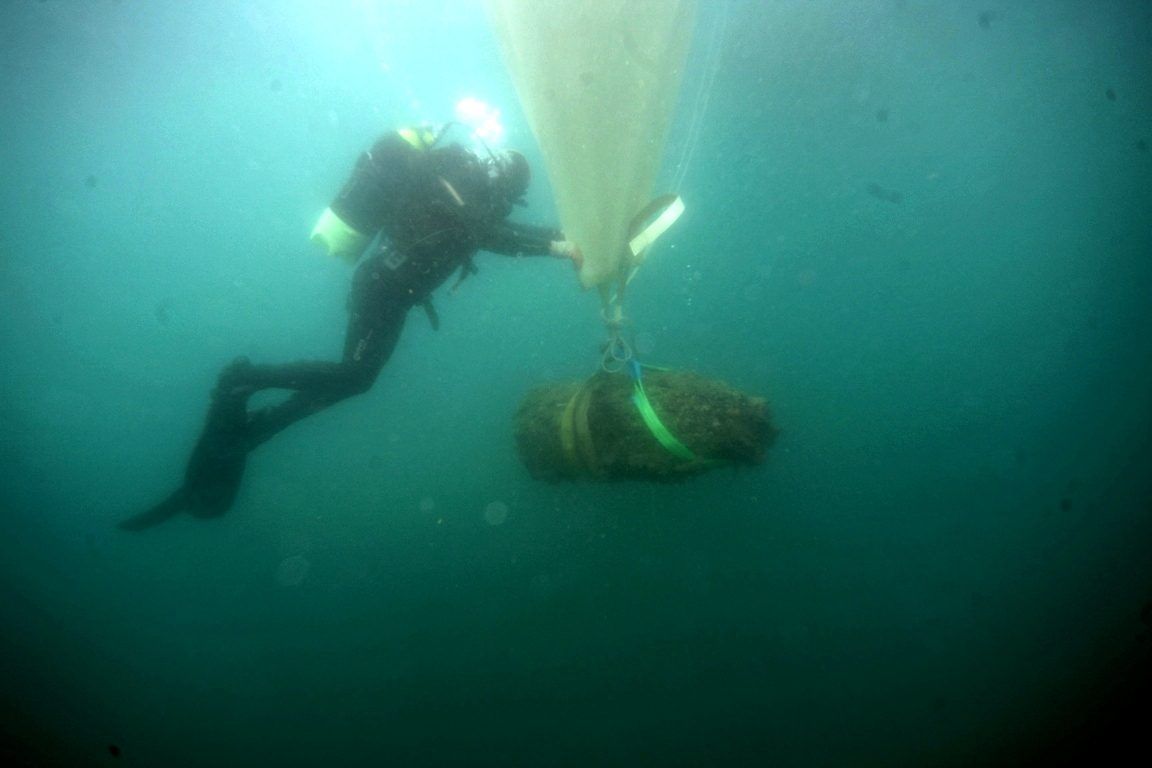
A century-old naval and military-industrial harbour, seabed strewn with iron debris and explosive remnants of two World Wars. Adriatic Marinas, the developer, commissioned RCUD to survey and clear the waterfront before construction.
Kumbor Naval Base → Portonovi
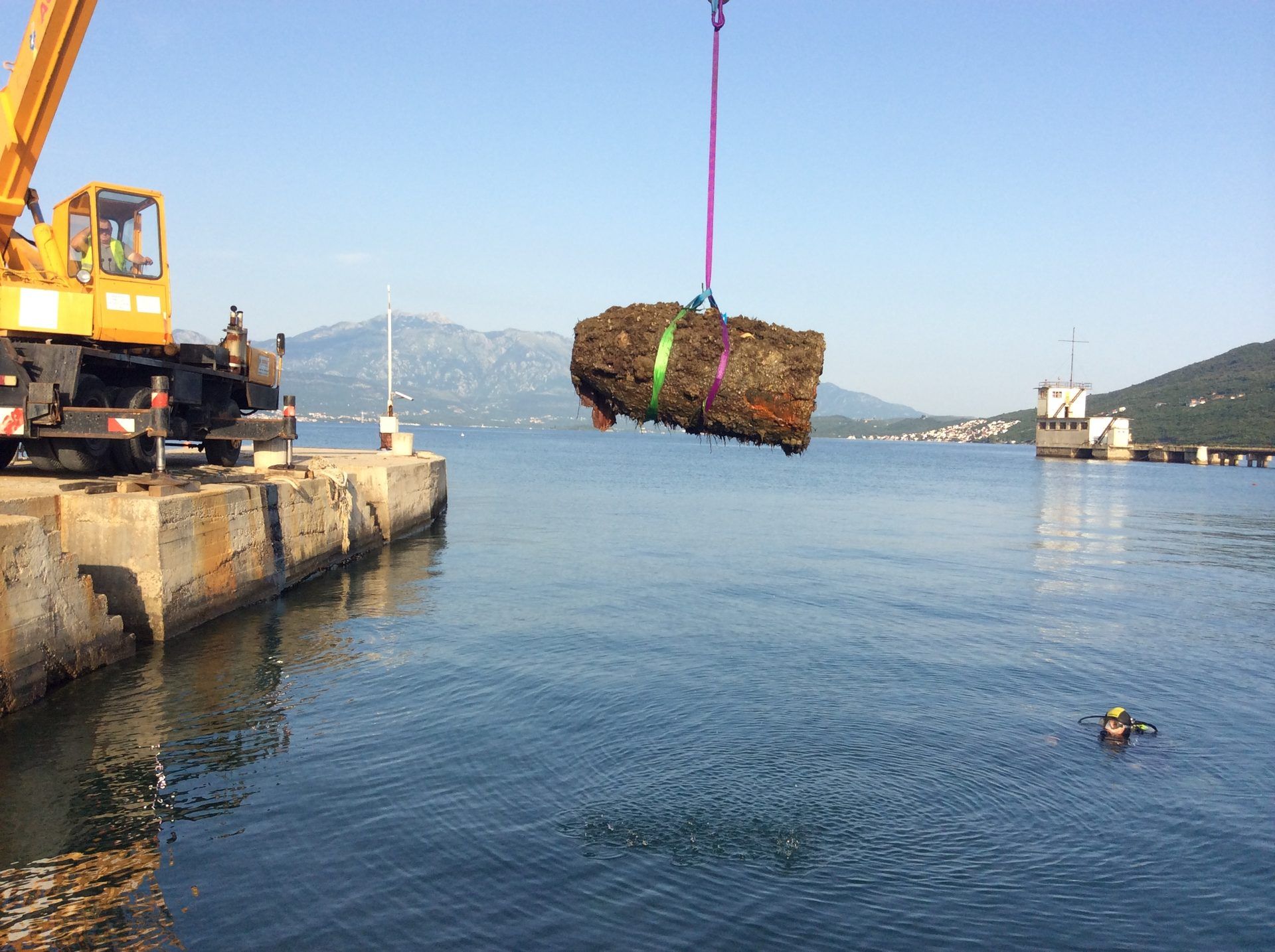
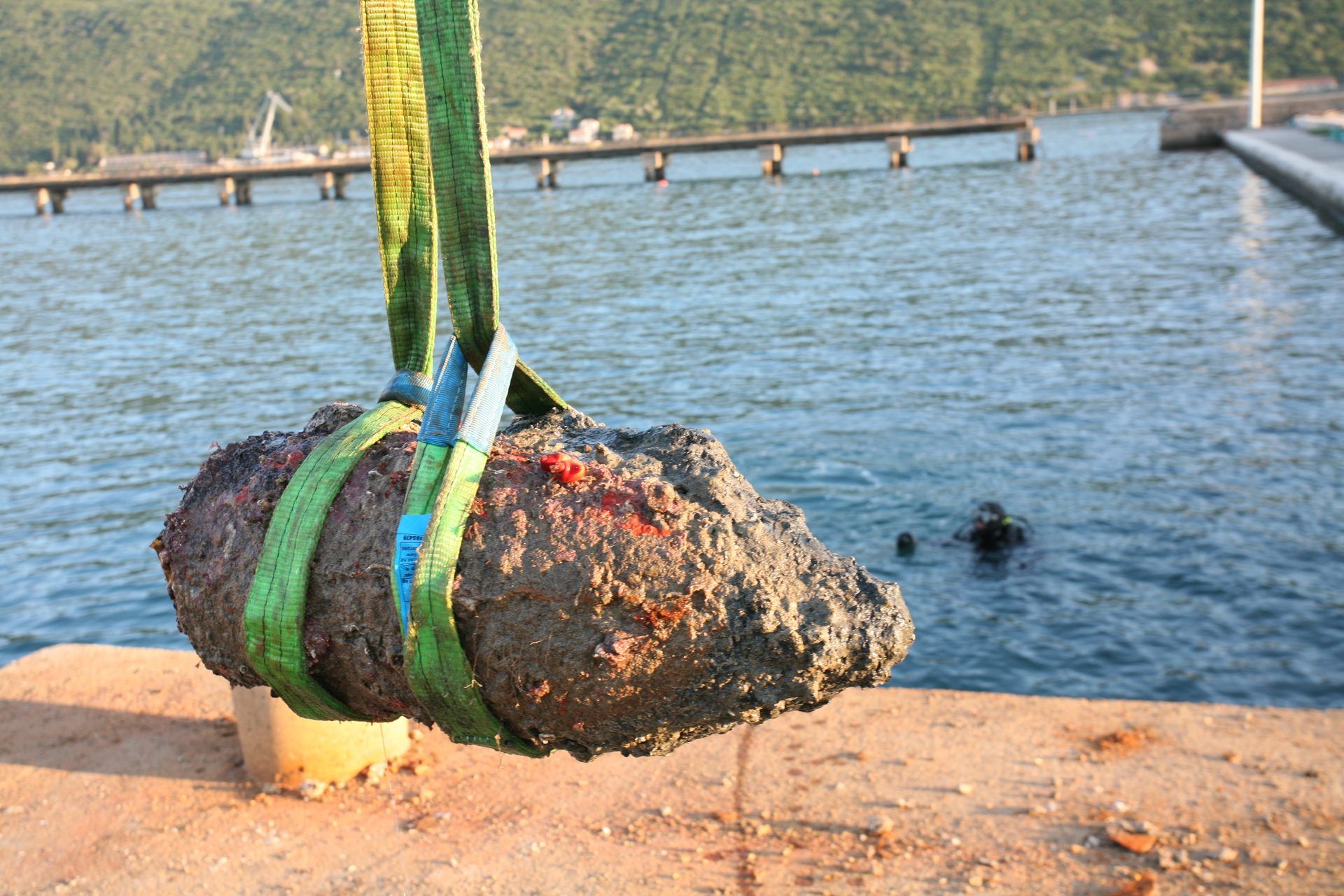
Home to a 1914 Austro-Hungarian seaplane base and the former Orjen Battalion barracks. Azmont Investments commissioned RCUD to clear the future Portonovi aquatorium — completed without a reported incident.
Different sites, the same underlying process
| Dimension | Arsenal / Porto Montenegro | Kumbor / Portonovi |
|---|---|---|
| Historical function | Naval & military-industrial facility (shipyard and arsenal) | Naval & military facility, including early naval aviation (1914) |
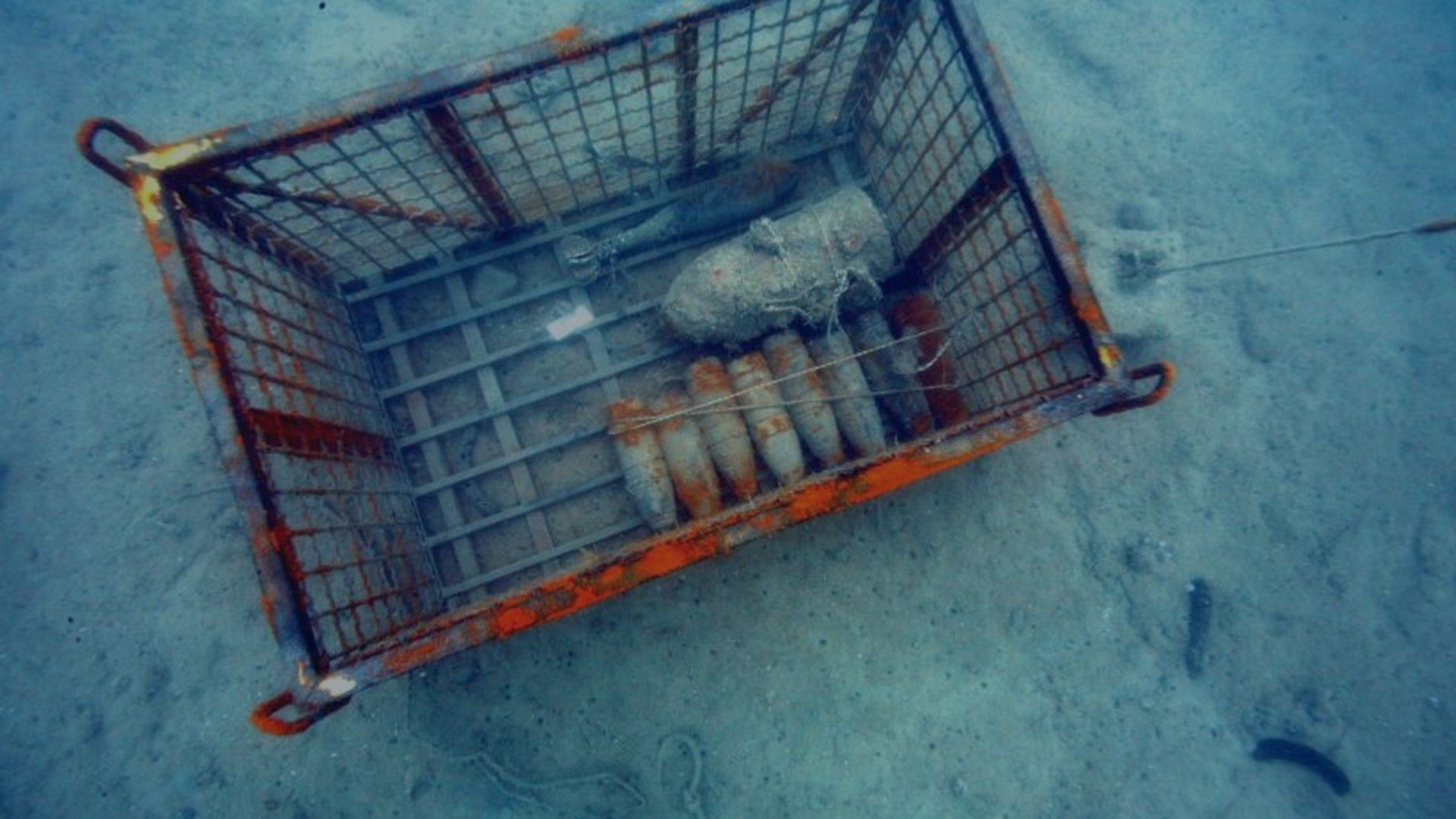
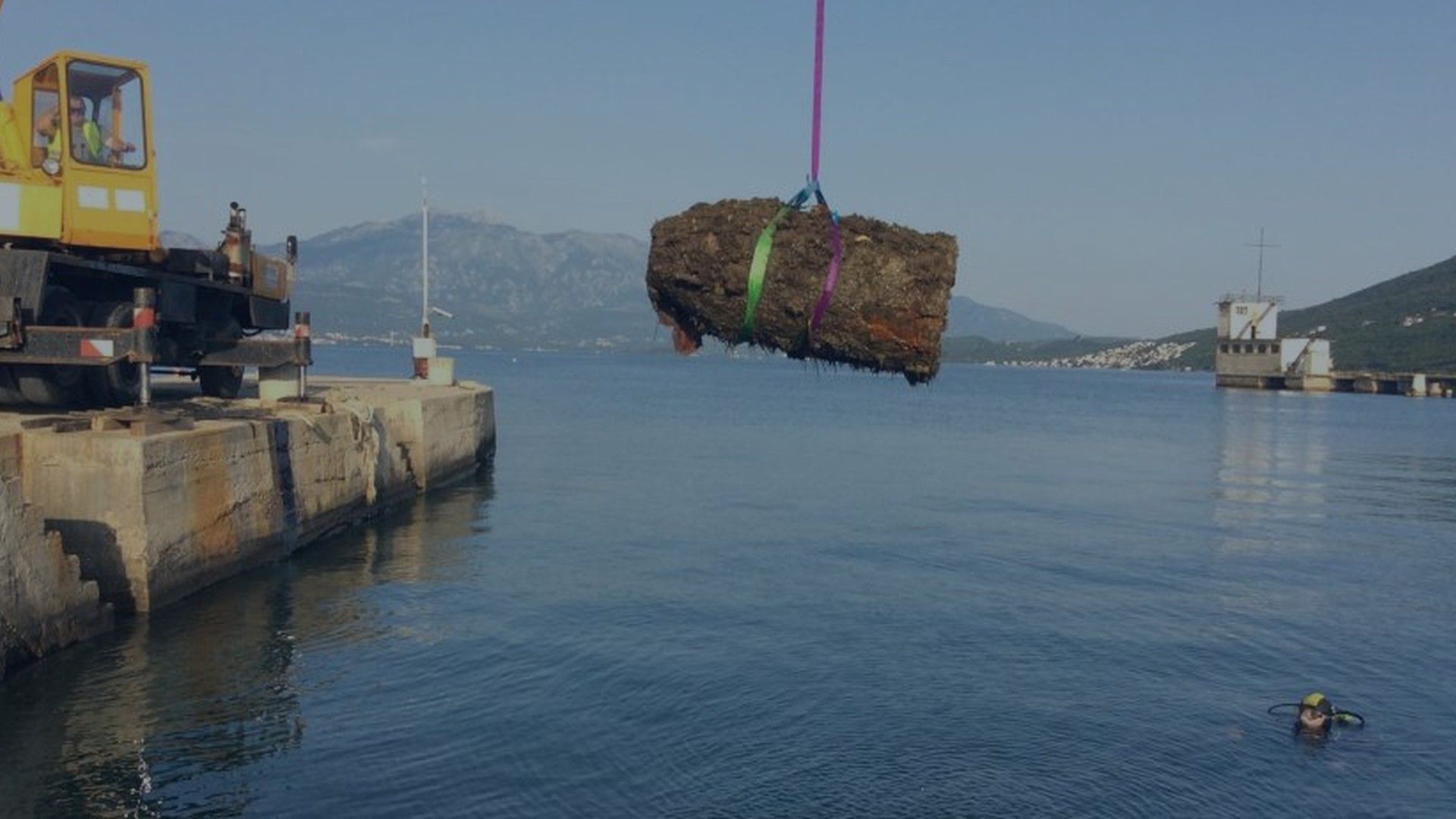
| Underwater area | 612,000 m² surveyed; 104,000 m² cleared (2008, 33 days) | 186,773 m² addressed (2014, 88 days, 2,800 diving hours) |
| Ordnance removed | ~17 tonnes | ~9.7 tonnes |
| Clearance financing | Privately commissioned — Adriatic Marinas d.o.o. | Privately commissioned — Azmont Investments d.o.o. |
| Subsequent function | Marina, tourism, residential & commercial | Integrated resort, marina, hospitality & residential |
| Strategic transformation | Military waterfront → international marina → 2026 EU–Western Balkans Summit venue | Military waterfront → international resort destination |
Operational figures combine publicly accessible professional reporting with Veselin Mijajlović's contemporaneous technical notes; project-level detail has not been independently verified.
Beyond the two flagship sites: a bay-wide clearance record
RCUD's operational record across the Bay of Kotor extends well past Arsenal and Kumbor — including the narrowest passage of the bay and a subsea power interconnector route.
Verige Strait
65 t
Narrowest passage in the Bay, cleared 2004.
Tivat Arsenal
~17 t
2008, ahead of Porto Montenegro construction.
Kumbor
~9.7 t
2014, ahead of Portonovi construction.
MONITA interconnector
~8.5 t
2018, Italy–Montenegro subsea power cable route (with Terna).
Cumulative total across documented Bay of Kotor operations: more than 90 tonnes of explosive ordnance.
5 June 2026: the former Arsenal waterfront hosts the EU
Porto Montenegro hosted the EU–Western Balkans Summit — the first summit of its kind held in Montenegro, and the highest-level international gathering in the country's history. Chaired by the President of the European Council and hosted by the President of Montenegro, under the theme "Shared prosperity and stability of the EU and the Western Balkans," it coincided with the 20th anniversary of the restoration of Montenegro's independence.
"The geography did not cease to be strategic. The meaning of strategic value changed."
Demining as investment-risk reduction
The economic contribution of clearance is not represented principally by the tonnage removed. Its value lies in the change to the usability and risk profile of the asset.
Military legacy
Decades of naval & military use.
UXO risk
Explosive remnants on the seabed.
Constrained usability
Land & seabed cannot be safely used.
Risk assessment & remediation
Survey, then proportionate clearance.
Verified site readiness
Reduced project uncertainty.
Capital investment
Marine construction can proceed.
Productive civilian use
Marina, resort, infrastructure.
Where the economic effect can travel
Direct effects
Employment, specialist services & procurement for investigation, clearance and site preparation.
Investment-enabling
Capital expenditure facilitated by reducing material site risks.
Multiplier effects
Construction, hospitality, maritime services, transport, local suppliers.
Fiscal effects
Taxes, concessions and fees from productive economic use.
Spatial effects
Regeneration of waterfronts and associated infrastructure.
Reputational effects
Greater confidence in a destination for tourism & investment.
Strategic infrastructure and European resilience
The same specialist capability required for tourism waterfronts is directly relevant to Europe's energy diversification, connectivity and maritime-security priorities.
Submarine energy
Montenegro–Italy electricity interconnection (MONITA), ~8.5 t cleared along the cable route.
Telecommunications
Subsea cable corridors sharing the same legacy-risk geography.
Ports & maritime transport
Dredging, harbour works and navigation channels.
Blue economy
Environmental restoration and offshore & coastal energy.
Beyond "how much will clearance cost?"
"What public, economic and strategic value is constrained by unresolved risk, and what becomes possible if that risk is appropriately reduced?"
Safety risk
What risks exist for people, navigation, construction workers and future users? This dimension stands first — always.
Economic opportunity
What investment, infrastructure or productive activity is constrained by the identified risk?
Strategic importance
Does the area support nationally or regionally important tourism, ports, energy, connectivity or maritime transport?
Environmental implications
What are the consequences of both contamination and intervention — how can remediation minimise unnecessary seabed disturbance?
Development additionality
What becomes possible after risk is reduced that would otherwise be impossible, far more expensive, or unacceptably risky?
MARSAFE: carrying specialist demining capacity into the region's future
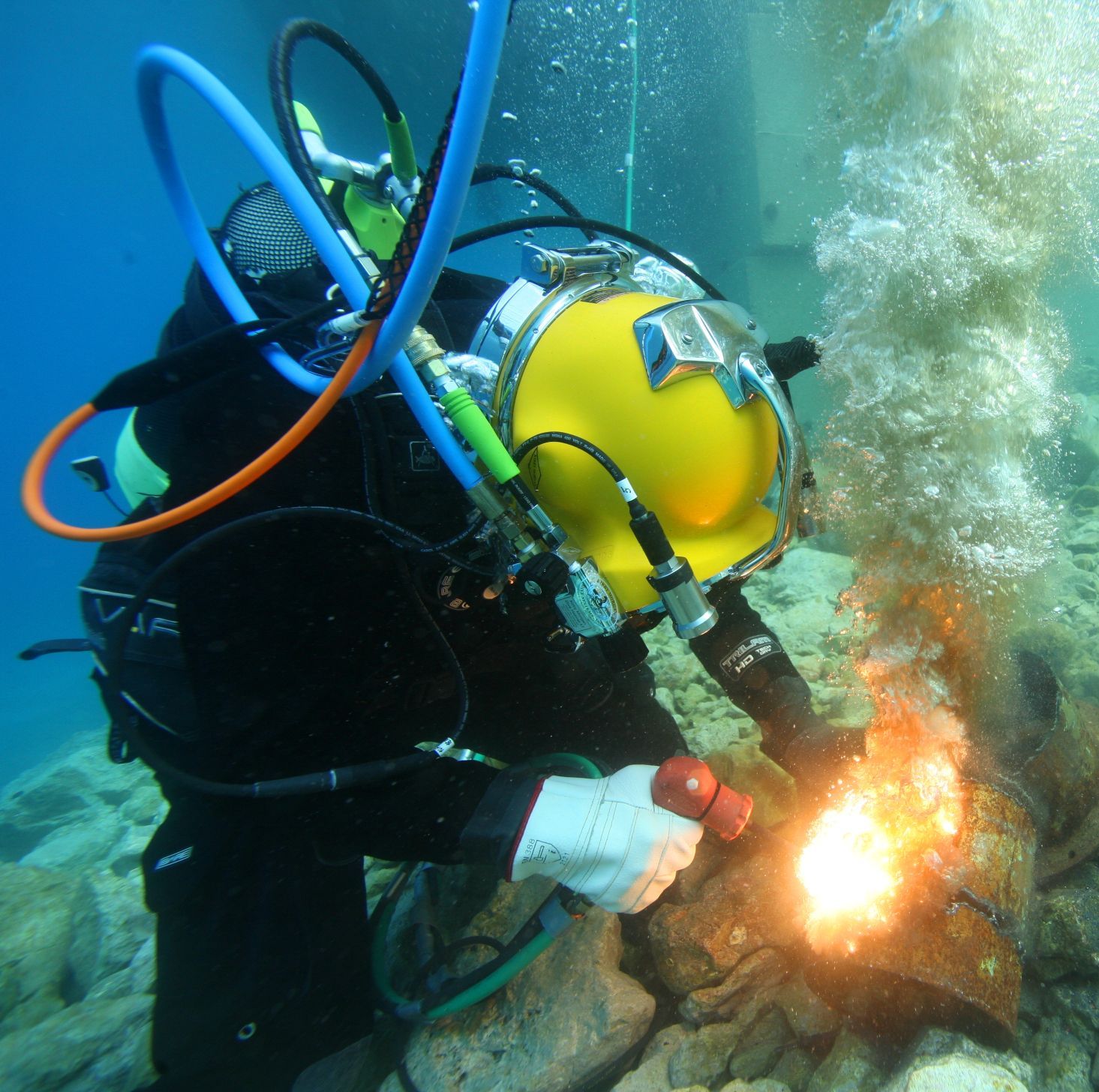
The operational record behind Arsenal, Kumbor, Verige and MONITA was built inside RCUD, Montenegro's national centre for underwater demining. That same specialist capacity now continues under MARSAFE, positioned as a dedicated capability for the wider Adriatic and Mediterranean.
Continuity of leadership
Veselin Mijajlović directed RCUD from 2004 to 2025, leading the Arsenal, Kumbor, Verige and MONITA clearance programmes documented in this presentation, and now leads MARSAFE.
Capacity that cannot be improvised
Certified underwater deminers, NORMOXIC-TRIMIX divers rated to 39–60 m, diving instructors and special-operations personnel, supported by a hyperbaric chamber on the working vessel — the referential minimums that qualify bay-scale clearance work.
A regional mandate
Positioned to support underwater UXO risk management wherever legacy military geography intersects tourism, energy and connectivity investment — across the Adriatic and beyond.
Montenegro is a tested pathway, not an isolated case
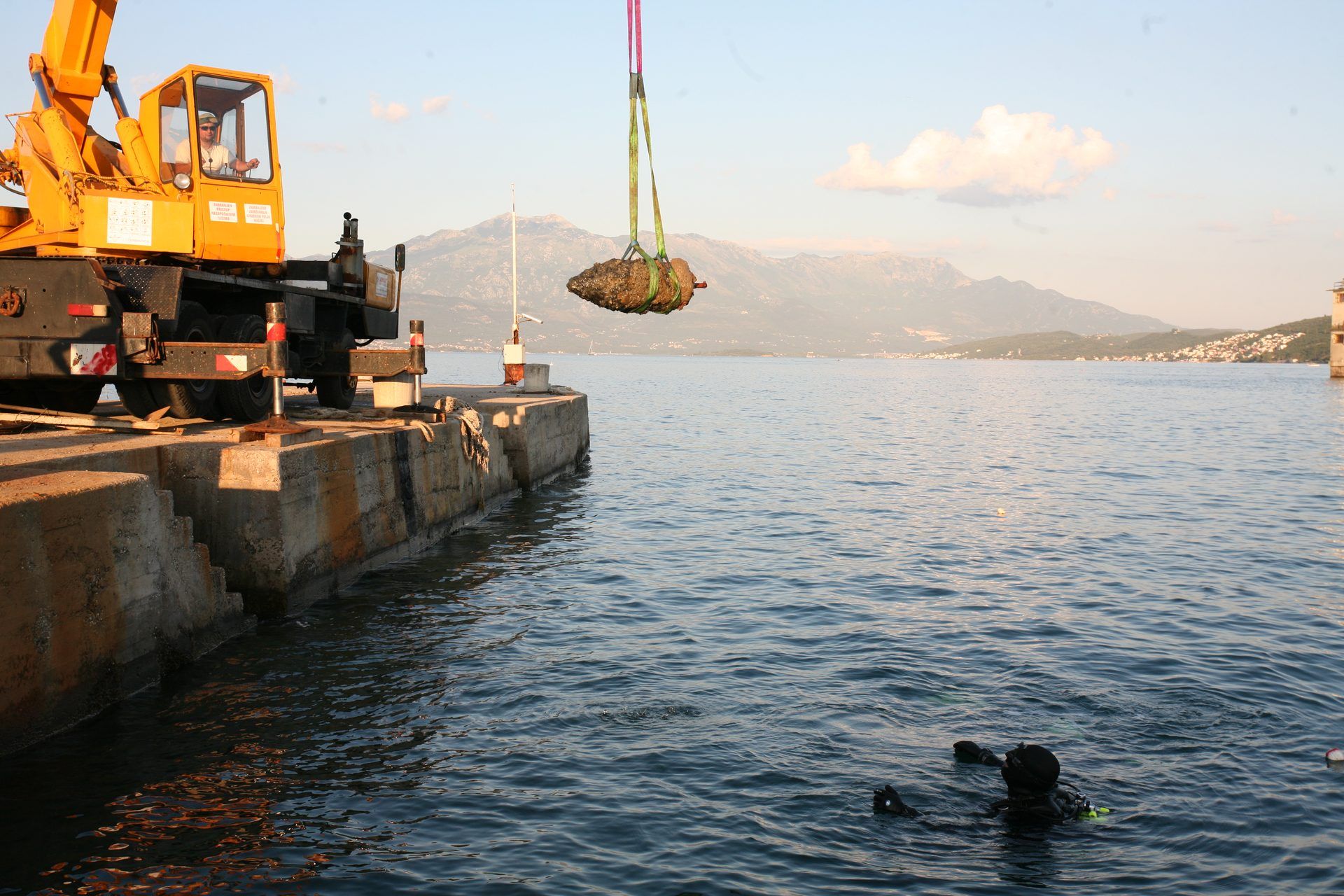
In May 2026, reporting on a planned luxury resort at Sazan Island, Albania highlighted unresolved underwater munitions as a material risk to the project — decades-old ordnance intersecting directly with contemporary tourism investment.
- Start early. UXO assessment belongs in feasibility studies and due diligence, not after capital is committed.
- Map risk against opportunity. Overlay UXO risk with planned tourism, ports, energy and connectivity projects.
- Assess against asset value. The right comparison is risk-reduction cost versus the value it protects — not cost per tonne.
- Capacity matters. Historical knowledge and specialist training cannot be recreated at short notice.
What this evidence can — and cannot — support
Selection on success
Arsenal and Kumbor are examined because their redevelopment succeeded. The two cases demonstrate a mechanism; they do not establish its frequency.
Sequencing
In both cases, developers contracted clearance after committing to invest. The record shows investment unlocking demining as much as demining unlocking investment.
Materiality
Documented clearance expenditure was small relative to the value of the completed developments — the investment-enabling effect remains unquantified.
Safety is not for sale
This framework is additive to, not a substitute for, safety-led humanitarian clearance. Where risk to people is significant, clearance is a public responsibility regardless of commercial potential.
Clearing the past to enable the future
Porto Montenegro and Portonovi demonstrate why underwater UXO risk management deserves consideration within economic development and investment policy — not only public security policy.
"Underwater demining should not be understood solely through what is removed from the seabed. Its wider development value can also be measured by what becomes possible afterwards."
Thank you
From Military Legacy to Economic Asset — prepared for the Symposium and Workshop on Munitions in the Sea, Monaco, September 2026.
Director, Regional Centre for Underwater Demining and Diver Training (RCUD), 2004–2025. 30+ years of underwater operations and demining leadership.
Economic development, governance and institutional reform. Contribution focused on investment-enabling conditions and strategic transformation.
MARSAFE Ltd.
Cetinjski put 36, Gornja Gorica81000 Podgorica, Montenegro
office@marsafe.me